
Stock confirmed 3 h 35 min ago
Peace Lily (Spathiphyllum)
- and we'll find out the delivery cost
- 1 person added the item to their collections
- You will get 5.97 bonuses
- The Flower Bar - Supershop. Supershops are shops with excellent reviews that do their best to offer high-quality customer service.
Watering frequency
2 times week
Size
- Width - 35 cm
- Height - 35 cm
Manufacturer
The flower bar, United Arab Emirates
Country of manufacture
United Arab Emirates
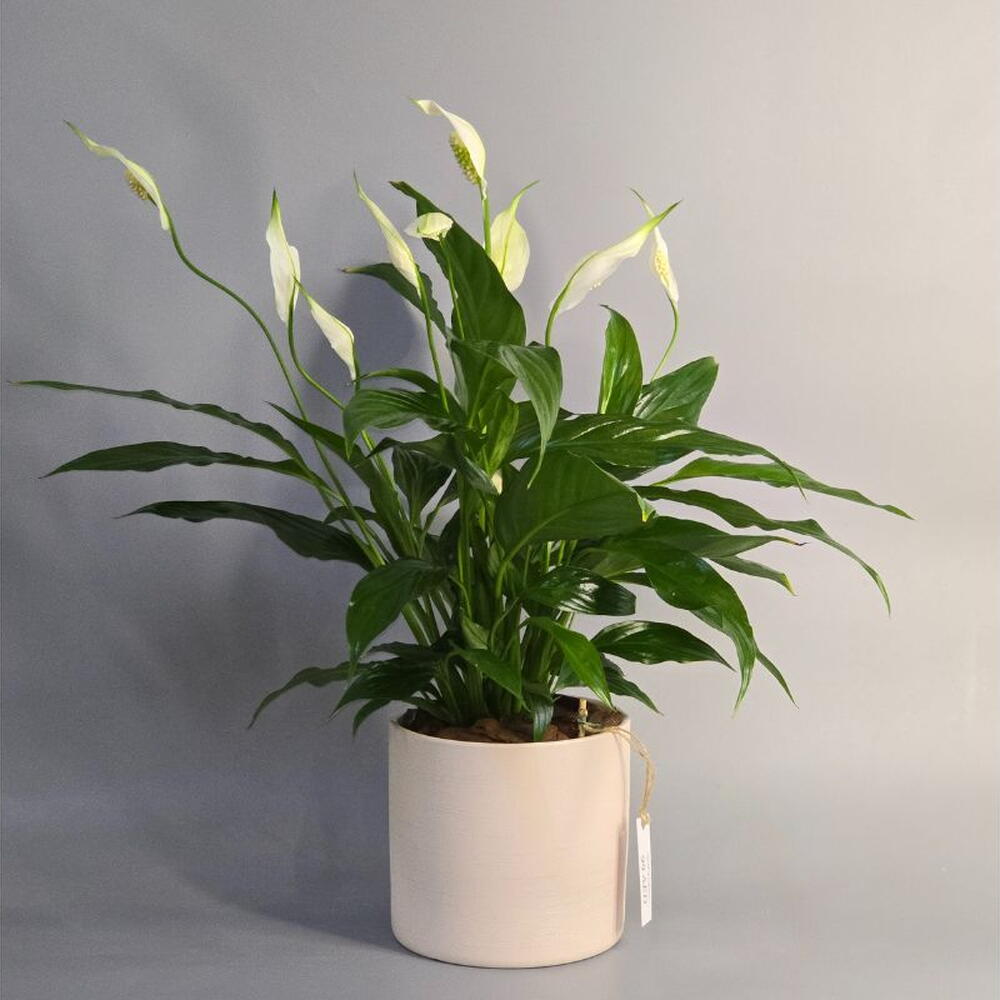
The Peace Lily is a popular and elegant houseplant, celebrated for its beautiful white blooms and glossy green foliage. Its not only a decorative addition to any room but also an air purifier, making it an excellent choice for improving indoor air quality. Description: Leaves: The Peace Lily’s lush, dark green leaves are long, lance-shaped, and glossy, providing a rich contrast to the plant’s delicate white blooms. The leaves grow in a rosette formation, arching elegantly as the plant matures. Flowers: The signature white flowers of the Peace Lily are not actual petals but spathes (a type of modified leaf) that surround a spadix (a long, cylindrical structure) where tiny flowers are located. These blooms typically appear in spring or summer and can last for several weeks. Size: Peace Lilies typically grow to about 1-4 feet in height, depending on the variety and growing conditions. Some varieties stay smaller and more compact, making them perfect for smaller spaces.
Care Guide
Care Tips: Light: Peace Lilies prefer bright, indirect light but can adapt to lower light conditions. However, they may not flower as frequently in low light. Avoid placing them in direct sunlight, as it can scorch the leaves. Watering: Keep the soil consistently moist, but not soggy. Water when the top inch of the soil feels dry to the touch. Peace Lilies are sensitive to overwatering, which can lead to root rot. They may also "droop" as a sign that they need water, which is a useful cue for timing. Soil: Well-draining, slightly acidic soil is ideal. A standard potting mix with added perlite or orchid bark can help ensure proper drainage. Temperature: Peace Lilies thrive in temperatures between 65°F and 80°F (18°C to 27°C). They prefer a warm environment, so protect them from drafts and cold temperatures, especially below 50°F (10°C). Humidity: These plants love humidity and will thrive in bathrooms, kitchens, or other areas with higher moisture levels. If the air is too dry, you can occasionally mist the leaves or place the pot on a tray filled with pebbles and water to increase humidity. Fertilization: Fertilize your Peace Lily every 6-8 weeks during the growing season (spring and summer) with a balanced, water-soluble fertilizer. Reduce feeding in the fall and winter when the plant is dormant. Repotting: Peace Lilies can become root-bound over time, so consider repotting them every 1-2 years into a slightly larger pot to promote healthy growth.
The Peace Lily is a popular and elegant houseplant, celebrated for its beautiful white blooms and glossy green foliage. Its not only a decorative addition to any room but also an air purifier, making it an excellent choice for improving indoor air quality. Description: Leaves: The Peace Lily’s lush, dark green leaves are long, lance-shaped, and glossy, providing a rich contrast to the plant’s delicate white blooms. The leaves grow in a rosette formation, arching elegantly as the plant matures. Flowers: The signature white flowers of the Peace Lily are not actual petals but spathes (a type of modified leaf) that surround a spadix (a long, cylindrical structure) where tiny flowers are located. These blooms typically appear in spring or summer and can last for several weeks. Size: Peace Lilies typically grow to about 1-4 feet in height, depending on the variety and growing conditions. Some varieties stay smaller and more compact, making them perfect for smaller spaces.
Care Guide
Care Tips: Light: Peace Lilies prefer bright, indirect light but can adapt to lower light conditions. However, they may not flower as frequently in low light. Avoid placing them in direct sunlight, as it can scorch the leaves. Watering: Keep the soil consistently moist, but not soggy. Water when the top inch of the soil feels dry to the touch. Peace Lilies are sensitive to overwatering, which can lead to root rot. They may also "droop" as a sign that they need water, which is a useful cue for timing. Soil: Well-draining, slightly acidic soil is ideal. A standard potting mix with added perlite or orchid bark can help ensure proper drainage. Temperature: Peace Lilies thrive in temperatures between 65°F and 80°F (18°C to 27°C). They prefer a warm environment, so protect them from drafts and cold temperatures, especially below 50°F (10°C). Humidity: These plants love humidity and will thrive in bathrooms, kitchens, or other areas with higher moisture levels. If the air is too dry, you can occasionally mist the leaves or place the pot on a tray filled with pebbles and water to increase humidity. Fertilization: Fertilize your Peace Lily every 6-8 weeks during the growing season (spring and summer) with a balanced, water-soluble fertilizer. Reduce feeding in the fall and winter when the plant is dormant. Repotting: Peace Lilies can become root-bound over time, so consider repotting them every 1-2 years into a slightly larger pot to promote healthy growth.
Ratings and reviews
Yuliya
This week
Maksim
May 2026
Sender
April 2026
Sender
April 2026
Franchement rien à dire, ils ont grave assuré ! Livraison super rapide, timing respecté et bouquet magnifique, encore plus beau en vrai. Je recommande sans hésiter.
Translate to English
Sender
April 2026
1258 ratings • 1093 purchases
Report Item
Other items of this shop