Bougainvillea red
- and we'll find out the delivery cost
- You will get 18 bonuses
Watering frequency
5 times per week
Size
- Width - 25 cm
- Height - 55 cm
Manufacturer
Uae
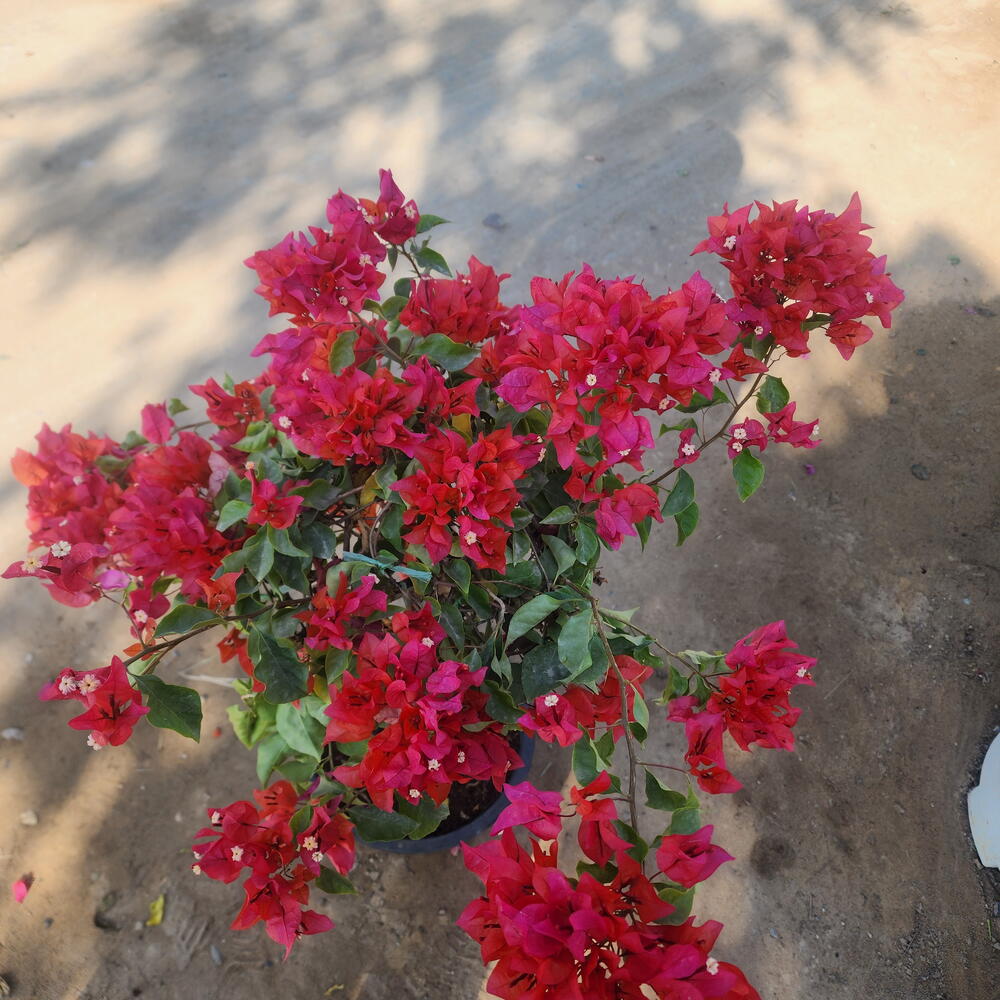
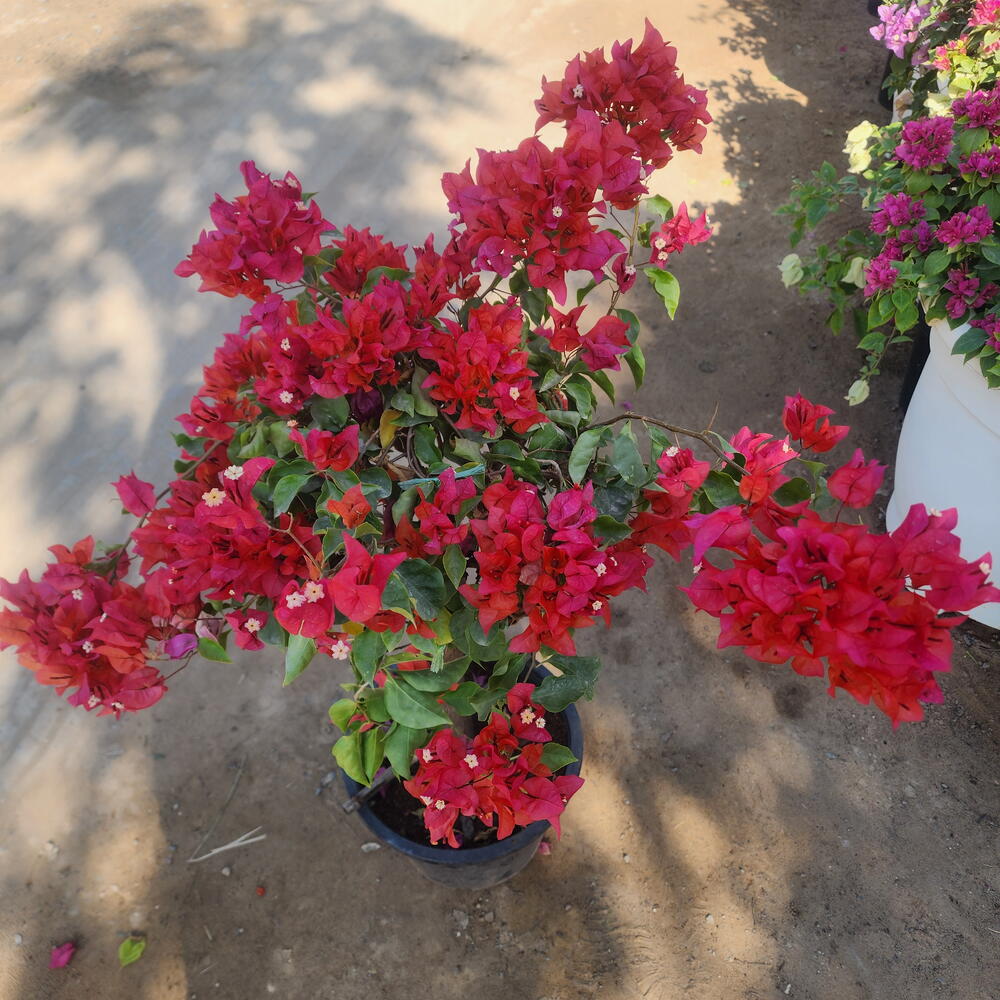
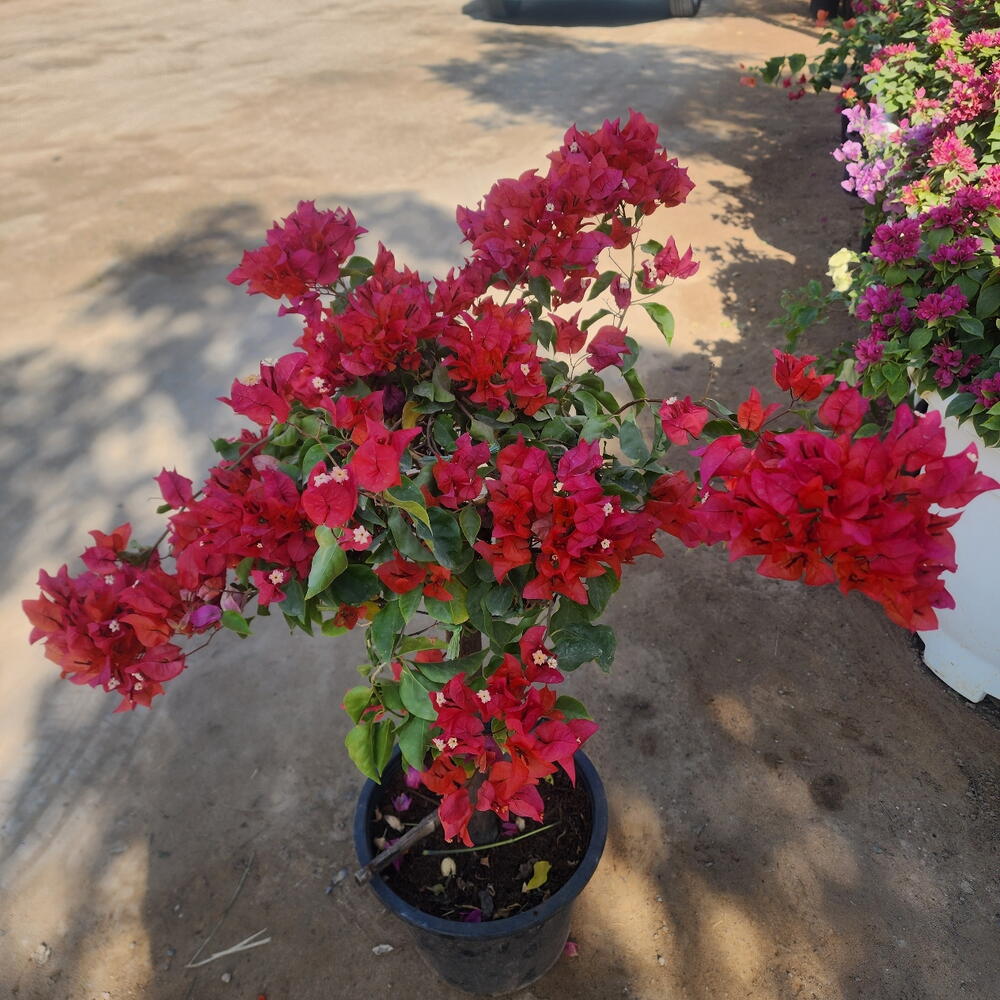
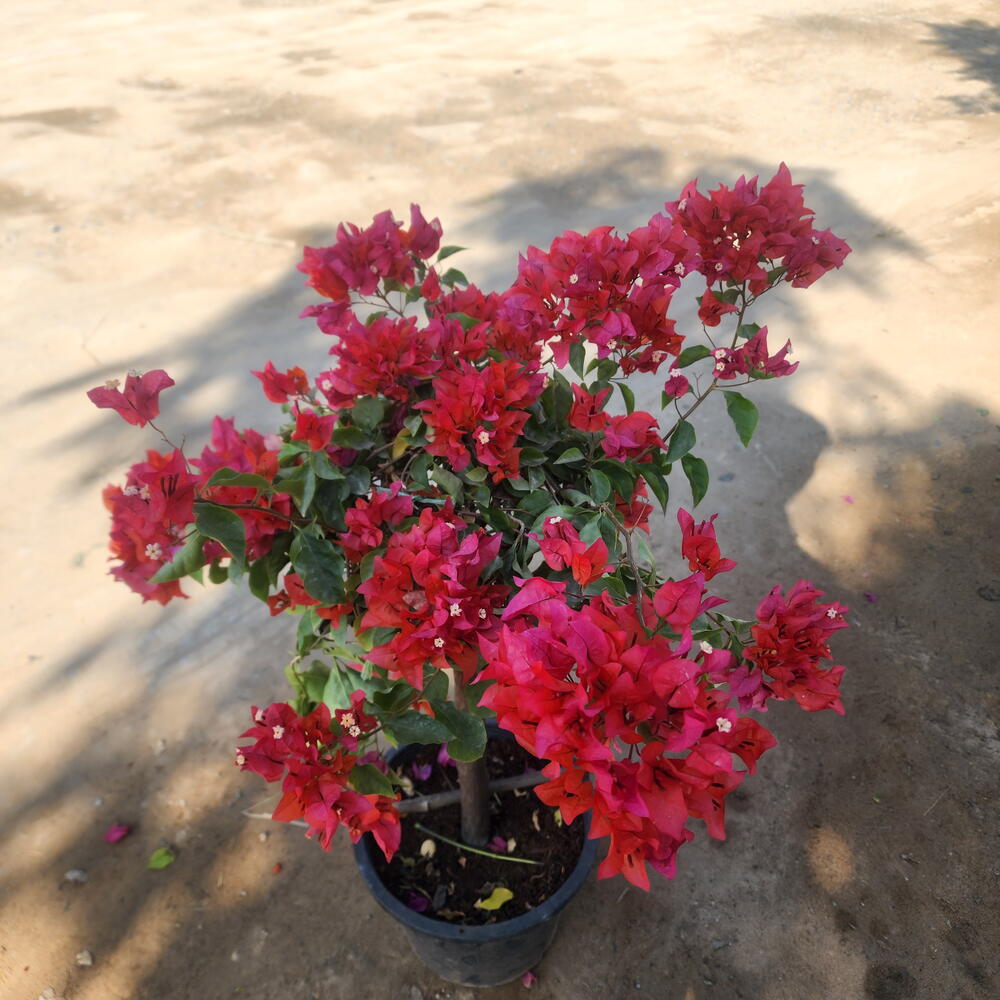
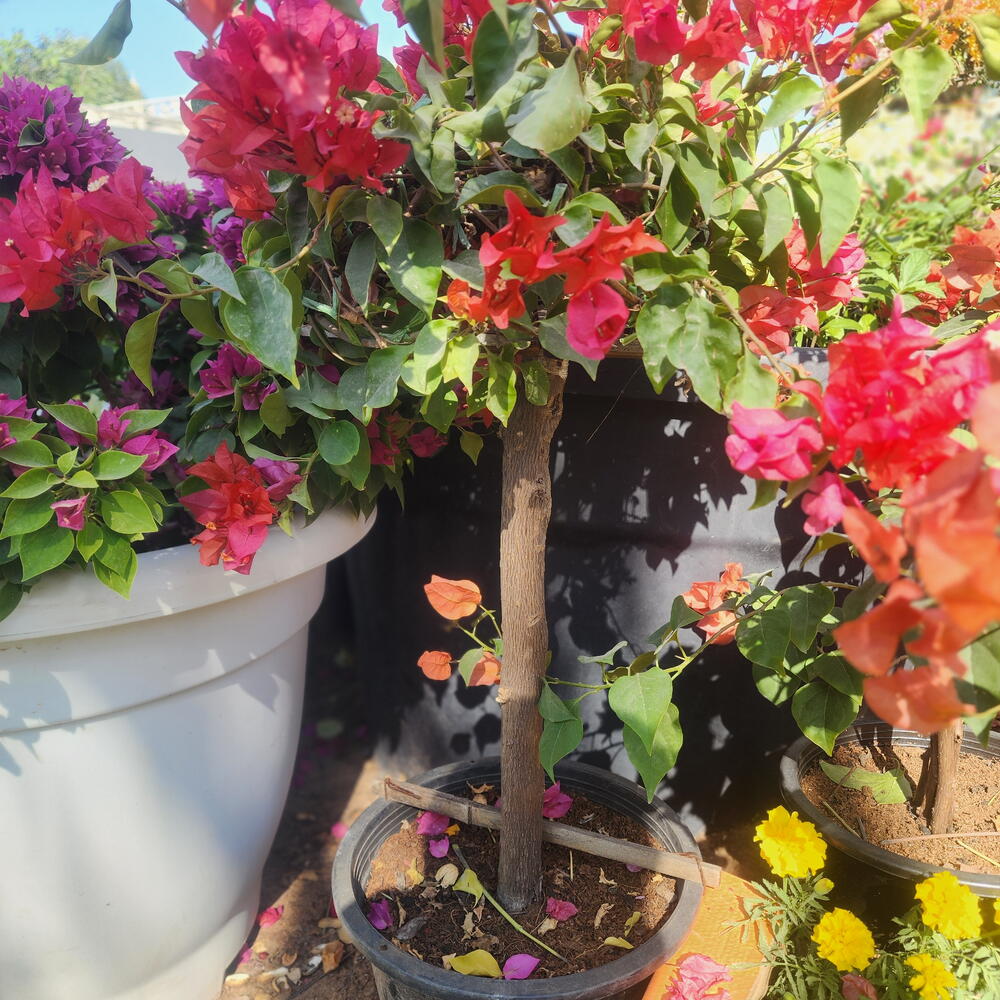
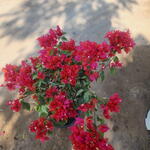
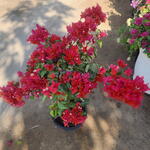
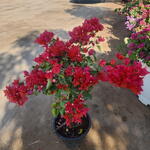
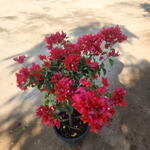
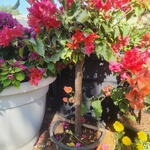
Bougainvillea cultivars and species are primarily discriminated based on morphological characteristics such as leaf shape, bract color and size, flower structure, and thorn characteristics. The main characteristics used to distinguish different Bougainvillea species and cultivars include: Bracts: The size, color, and shape of the colorful bracts (often mistaken for flowers) are key identifiers. Flowers: Differences exist in the color of the actual small, tubular flowers and the positions of the stamens. Thorns: The shape and branching of the thorns can be used for classification. Floral Tubes: Bougainvillea glabra has distinctly 5-angled floral tubes, while Bougainvillea spectabilis has rounded floral tubes.
Care Guide
The plant in the image is a bougainvillea. Proper care involves specific conditions to ensure vibrant blooms and healthy growth. Sunlight: Bougainvillea thrives in full sun and requires a minimum of 6 hours of direct sunlight daily for optimal growth and flowering. More sun generally results in more blooms. Watering: Once established, water the plant deeply but infrequently, allowing the top inch or so of the soil to dry out between waterings. Overwatering or constantly wet soil can lead to root rot and inhibit blooming. Soil: The plant prefers well-draining, slightly acidic soil (pH 5.5–6.0). If planting in a pot, a terracotta container can help prevent the soil from staying too wet. Temperature: As tropical plants, bougainvilleas prefer warmer climates and should be protected from frost. Established plants can survive occasional cold snaps, but they thrive in hardiness zones 9 and above.
Bougainvillea cultivars and species are primarily discriminated based on morphological characteristics such as leaf shape, bract color and size, flower structure, and thorn characteristics. The main characteristics used to distinguish different Bougainvillea species and cultivars include: Bracts: The size, color, and shape of the colorful bracts (often mistaken for flowers) are key identifiers. Flowers: Differences exist in the color of the actual small, tubular flowers and the positions of the stamens. Thorns: The shape and branching of the thorns can be used for classification. Floral Tubes: Bougainvillea glabra has distinctly 5-angled floral tubes, while Bougainvillea spectabilis has rounded floral tubes.
Care Guide
The plant in the image is a bougainvillea. Proper care involves specific conditions to ensure vibrant blooms and healthy growth. Sunlight: Bougainvillea thrives in full sun and requires a minimum of 6 hours of direct sunlight daily for optimal growth and flowering. More sun generally results in more blooms. Watering: Once established, water the plant deeply but infrequently, allowing the top inch or so of the soil to dry out between waterings. Overwatering or constantly wet soil can lead to root rot and inhibit blooming. Soil: The plant prefers well-draining, slightly acidic soil (pH 5.5–6.0). If planting in a pot, a terracotta container can help prevent the soil from staying too wet. Temperature: As tropical plants, bougainvilleas prefer warmer climates and should be protected from frost. Established plants can survive occasional cold snaps, but they thrive in hardiness zones 9 and above.
Ratings and reviews
Sender
January 2026
Sender
February 2024
Sender
March 2023
Все красиво и все вовремя. Спасибо
Translate to English
Sender
March 2023
Report Item
Other items of this shop